How can ADAS and assistive driver technology be improved to instill trust and confidence for families in high-distraction scenarios?
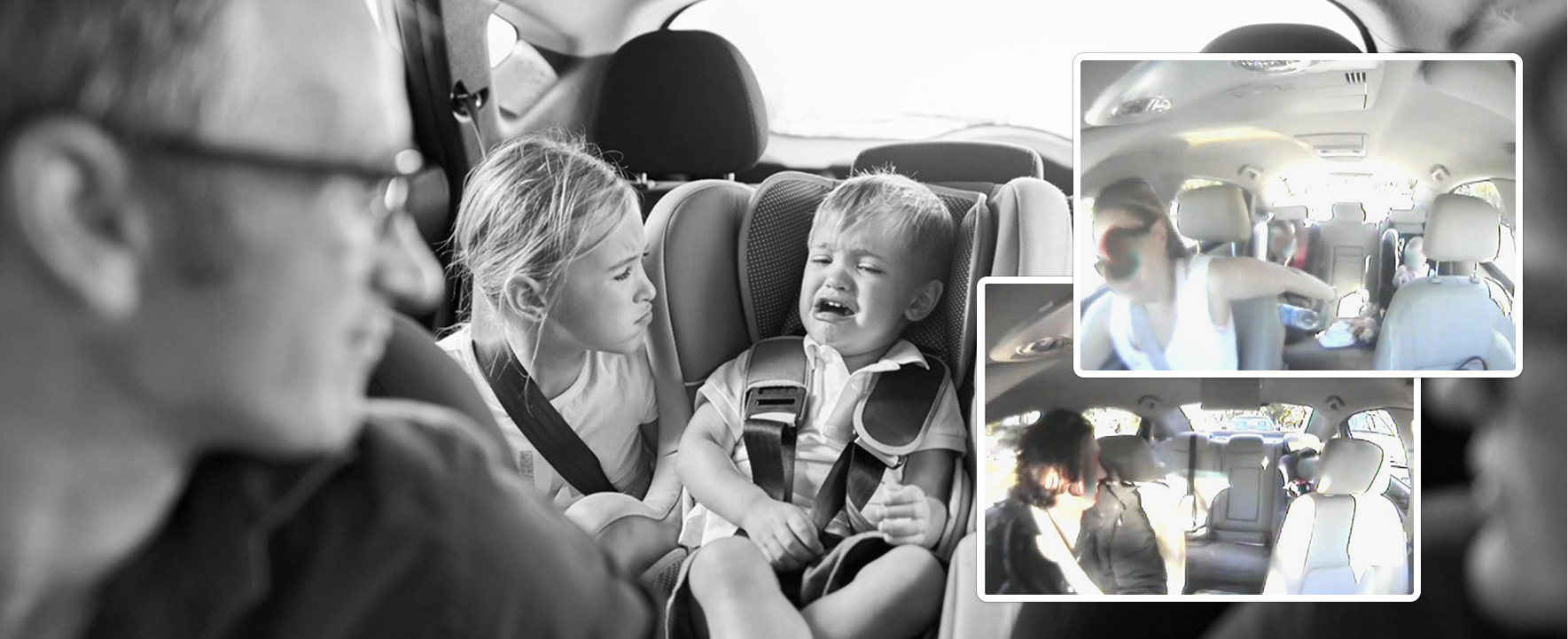
Distractions from child-occupancy is one of the greatest causes of dangerous behaviors among parents while driving. Dangerous behaviors are defined as any behavior that causes them to keep their eyes off of the road for 3 seconds or longer. In this project, I contextualize the use of autonomy features as a primarily safety measure that creates trust and reassurance for parents while they are driving in these high-distraction situations. I explore various modalities for clearly communicating to the driver the state of the vehicle, its thinking process, and what the drivers safely permitted to do.
💡 Ask me more about my research and process during interviews!

High-stress scenario #1: Activating and transitioning autonomy levels
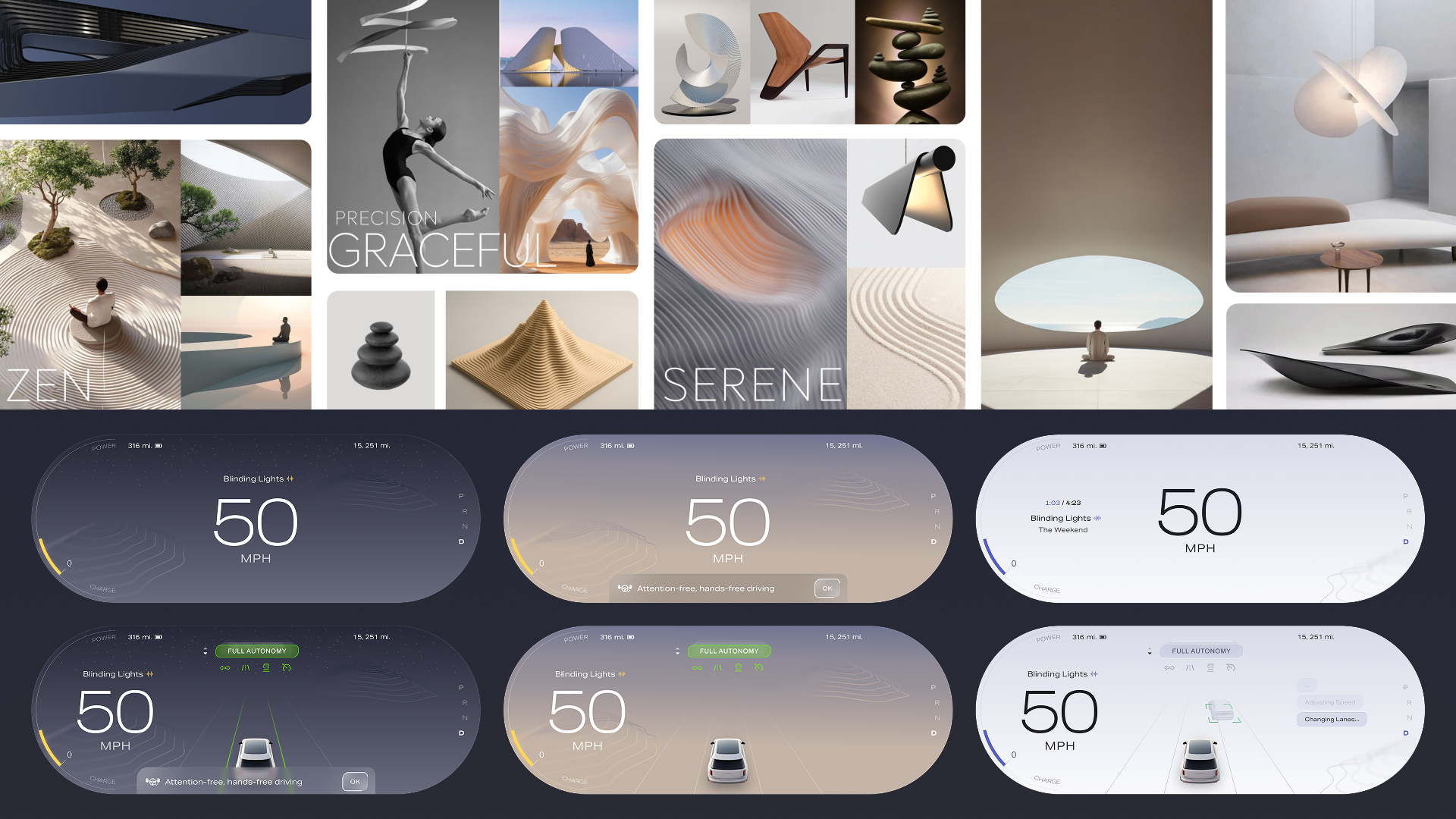
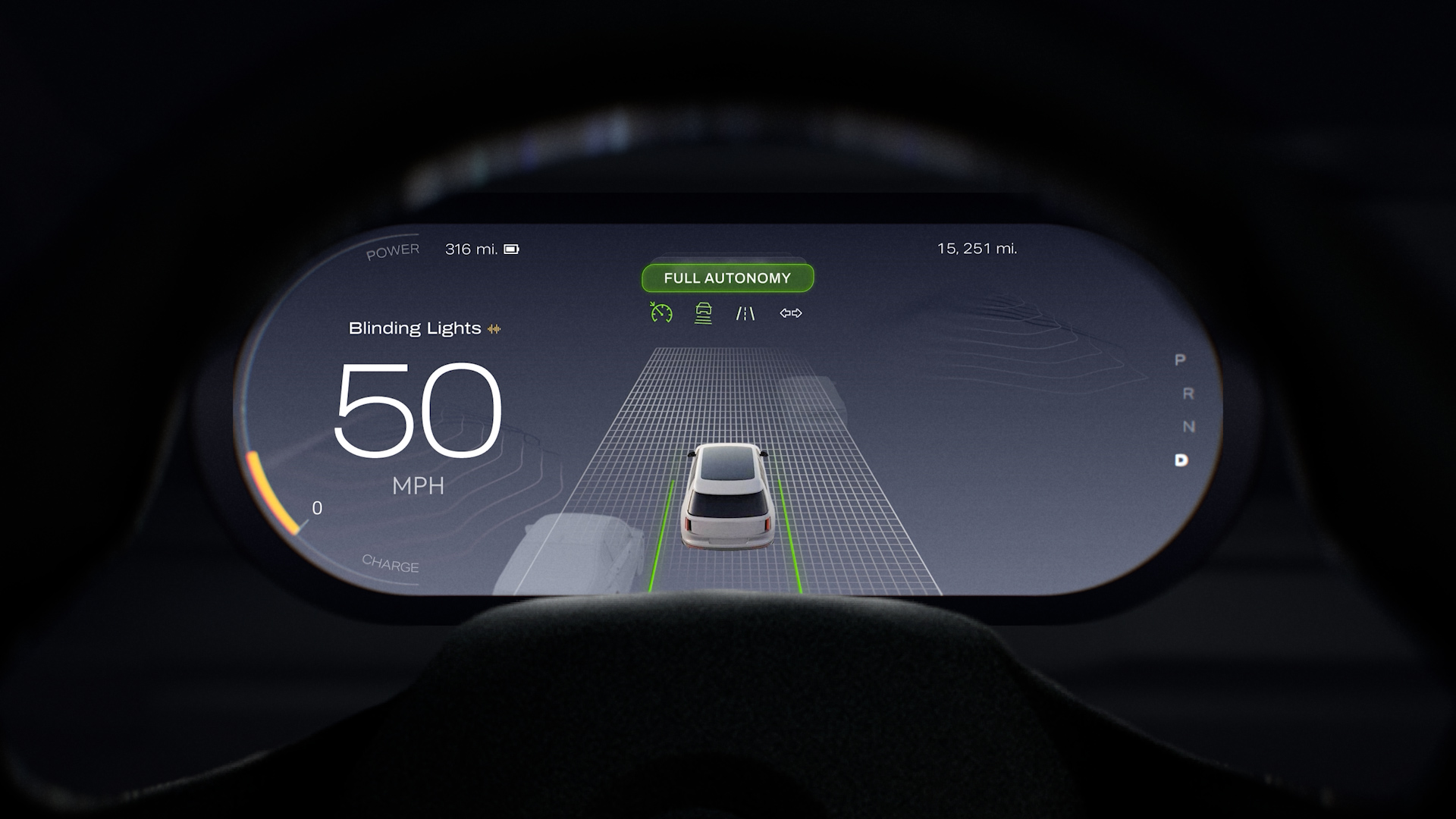
Many users expressed uncertainty about the status of the autonomy features after they activated them. It is crucial that these feature states be activated deliberately, have clear signals about precisely what technology is engaged, and most importantly what the driver can or cannot do given those states.
I accomplished this in three parts:
- Press-and-hold interaction for acitvation with visceral feedback (haptic, sound, animation)
- Telltales and 3D representations showing the level of technology enabled or disabled in each level
- Toast message and persistent reminder indicated the hands-free, attention free condition of the feature
High-stress scenario #2: vehicle merges directly in front of the driver
When another vehicles merge rapidly in front the driver, this can create a high-stress situation where the driver is unsure how their vehicle may respond, or if it even sees the vehicle approaching. It's crucial to communicate to the driver that it's tracking the other vehicle, and that itwill respond appropriately if necessary to maintain a safe distance.
High-stress scenario #3: exiting the highway
Perhaps the pinnacle of stress in the vehicle is taking the exit ramping during heavy traffic. This scenario is stressful enough as it is without autonomy features, which makes all the more necessary to communicate the vehicle's thinking during this complex sequence.
AI Explainability: The key solution that creates trust between the driver and is the chain of thought reasoning that explains what the vehicle is thinking at every step of the sequence. The 3D graphics compliment these brief thoughts in natural language, and the audible chines add level of reassurance that visuals cannot provide alone. Engaging all the senses thoughtful creates the most trustworthy experiences in these L3 driving scenarios.
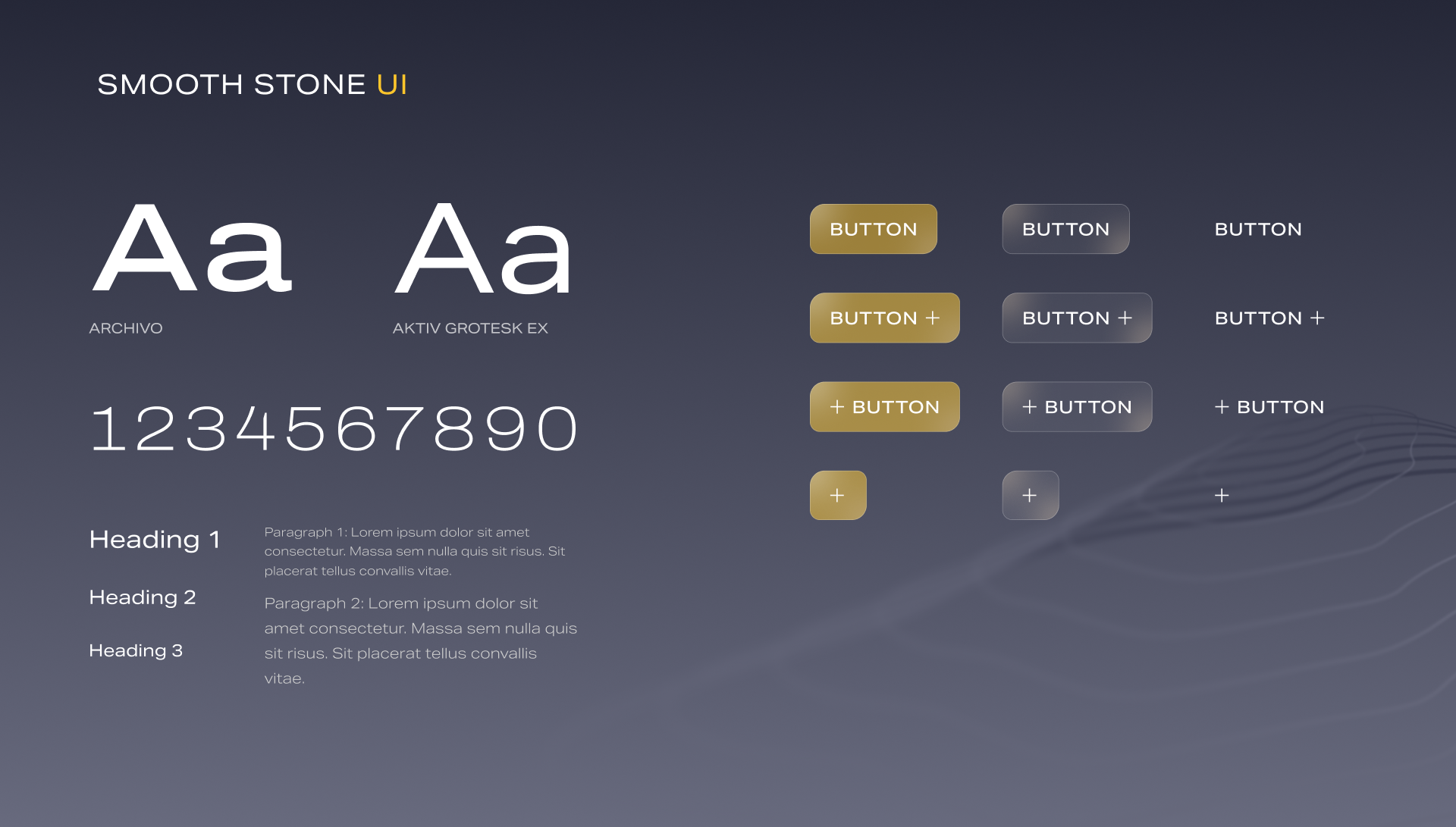
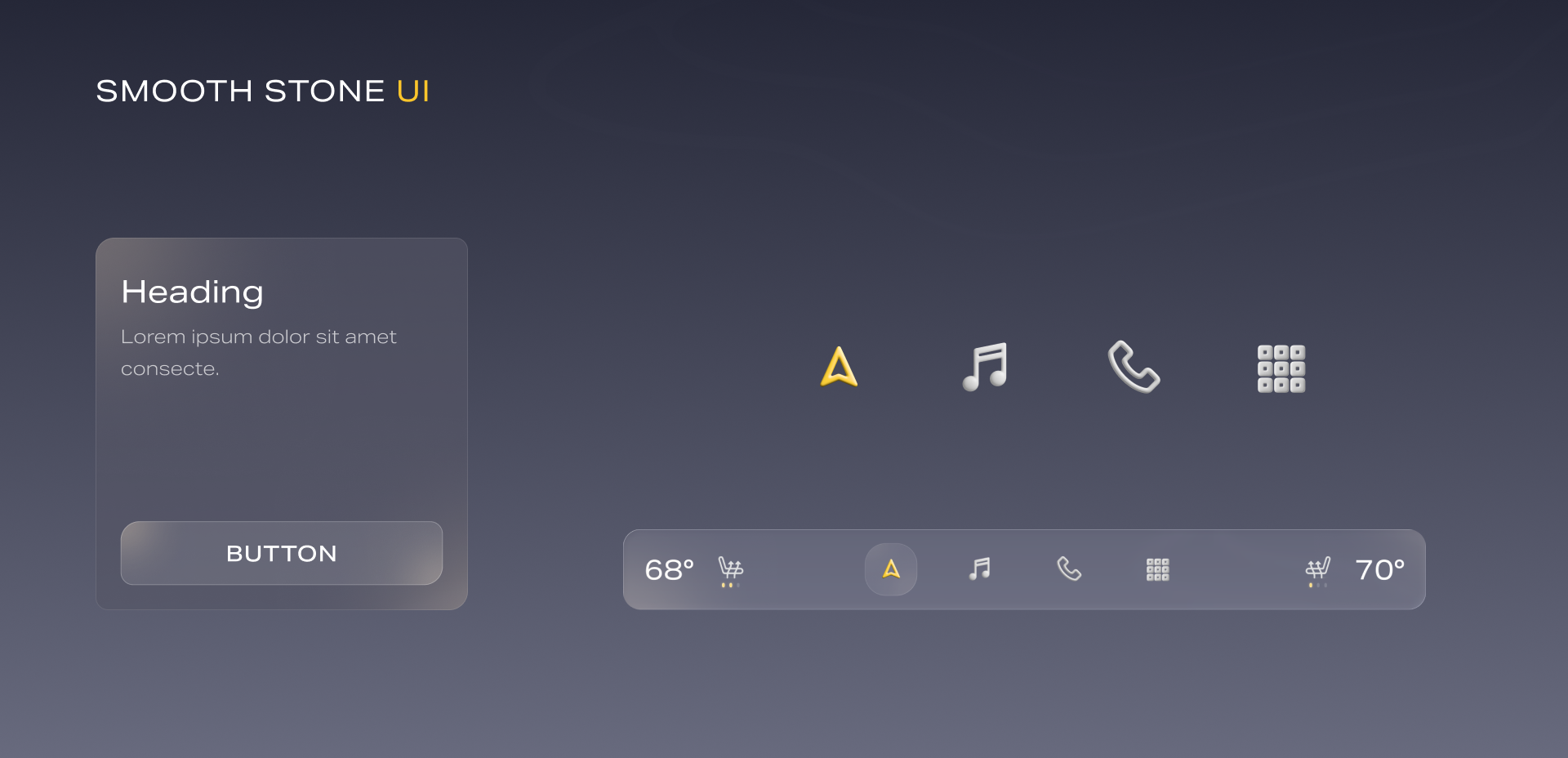
Smooth Stone UI: A UI Kit that envokes calm and tranquility
Inspired by the features of sand and stone, this UI kit compliments the design decisions that create trust for the driver.